


Common process selection: Caustic soda plants of this scale usually choose appropriate production processes based on their own technical advantages, raw material conditions, and cost considerations, such as the ion exchange membrane method. The ion exchange membrane method is widely used in large-scale caustic soda production due to its advantages of high purity of caustic soda produced, relatively efficient energy utilization, and good separation of by-products such as chlorine and hydrogen. Through the selective permeability function of the ion exchange membrane, the migration direction of ions is precisely controlled, so that the sodium chloride solution is accurately converted into caustic soda, chlorine and hydrogen in the electrolyzer, laying a good foundation for subsequent product refining and by-product utilization.
Process characteristics and advantages: Compared with the traditional diaphragm method, the caustic soda products produced by the ion exchange membrane method have extremely low impurities such as sodium chloride, which can generally be controlled within a very small range. This is particularly critical for application scenarios that require high-purity caustic soda, such as some fine chemical synthesis reactions and electronic-grade product manufacturing. Moreover, the entire production process also performs well in energy consumption control. By rationally configuring electrolytic cells, optimizing power supply, and adopting advanced supporting processes such as evaporation and concentration, it is possible to reduce energy consumption per unit product while ensuring output, thereby improving the factory's economic benefits and competitiveness in the market.

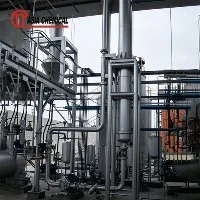
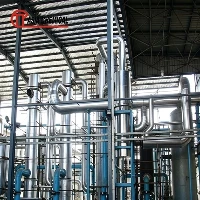
: The caustic soda solution from the electrolyzer is typically under-concentrated, so an evaporator is used to increase its concentration. Multi-effect evaporators, which use steam to heat and evaporate water, are commonly used for energy-efficient concentration, raising the caustic soda to industrial standards (e.g., 30%, 32%, or 50%).
: Filtration devices remove solid impurities, while ion exchange resin towers eliminate trace metal ions (e.g., calcium, magnesium) and other impurities, ensuring high-purity, stable-quality caustic soda for industrial use.
One-Stop
Source of raw materials: The main raw material sodium chloride usually chooses high-quality industrial salt, which may come from sea salt, well salt or mineral salt. The factory will establish a stable raw material supply channel. For sea salt, the seawater quality and sun-drying process of the salt field will be inspected to ensure that the initial impurity content of the salt is within a controllable range; for well salt and mineral salt, attention will be paid to quality assurance during the mining process and subsequent preliminary processing links to ensure that the raw salt entering the factory meets production requirements.
Quality control: Before the raw materials enter the production process, there will be strict pretreatment procedures, including dissolution, precipitation, filtration, and adding refining agents for chemical reaction and impurity removal. By precisely controlling the reaction conditions, such as temperature, pH, and the amount of refining agents added, the impurities in the raw salt are removed to the maximum extent, ensuring that the brine entering the electrolytic cell is of high purity, providing a basic guarantee for the stable production of high-quality caustic soda products, and avoiding equipment damage or product quality failure due to raw material impurities.
Tagiau poblogaidd: 110000 tpy caustic soda plant, China, manufacturers, suppliers, factory, wholesale, price, profession, cost


